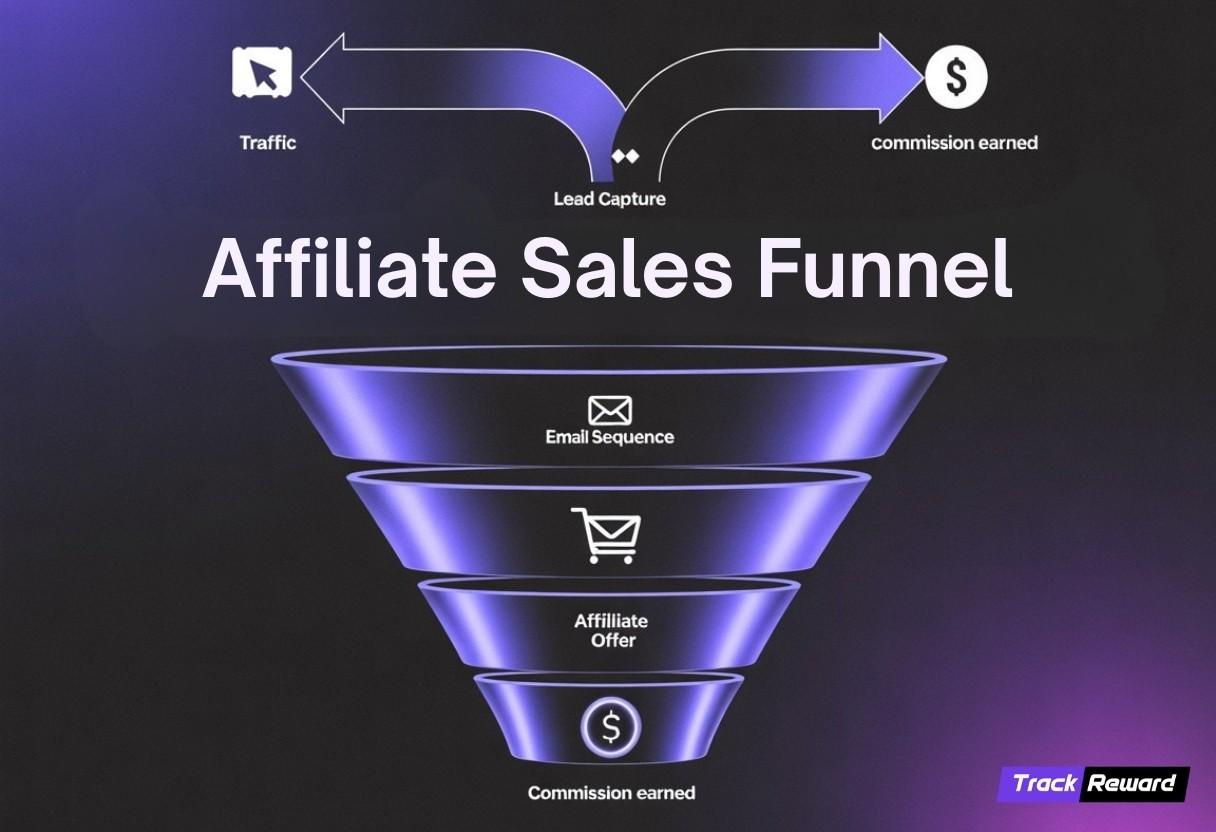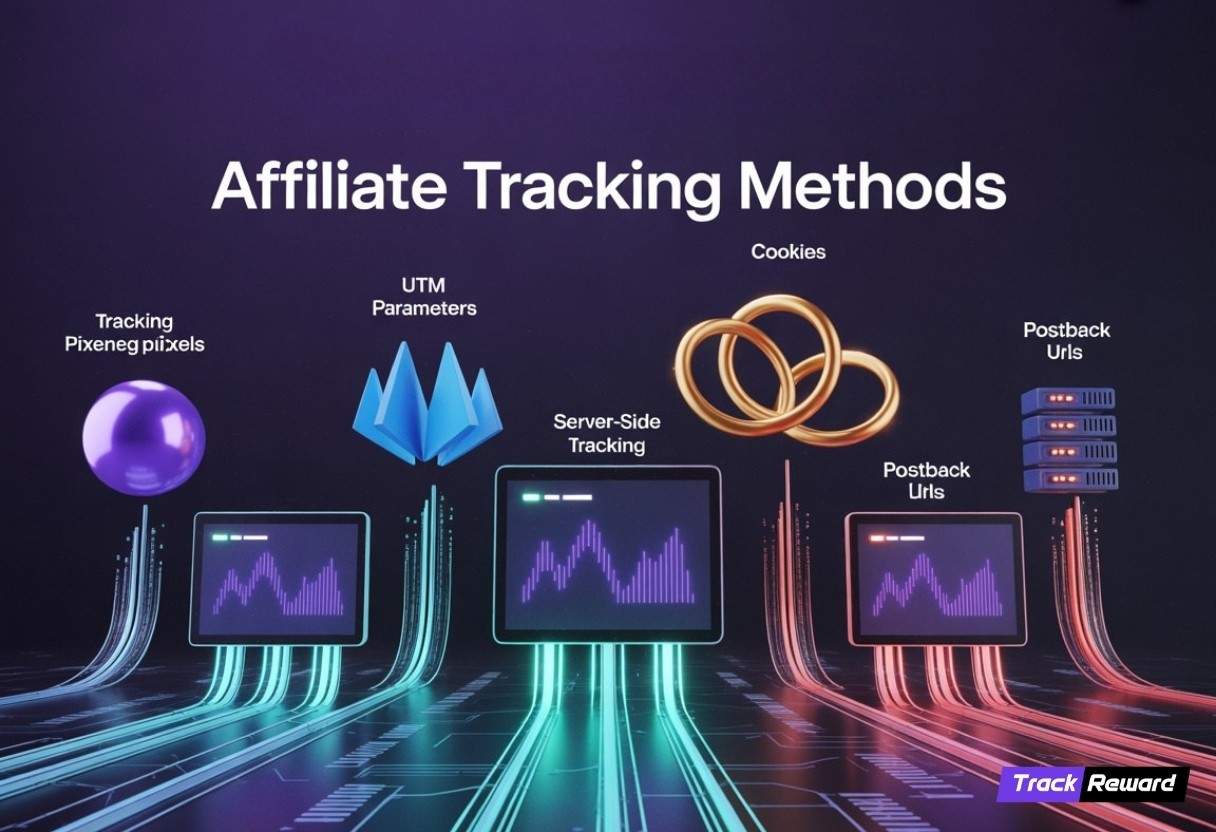
In a world of affiliate marketing, tracking is what separates high-performing strategies from hopeful guesses. Affiliate tracking methods prevent marketers from having to play detective every time a sale appears out of nowhere.
Understanding affiliate tracking methods is essential for brands seeking accuracy, transparency, and measurable growth.
As affiliate programs expand across multiple platforms, effective link tracking and attribution have become critical components for evaluating partner performance and optimizing ROI.
Let’s see a structured overview of the most reliable tracking techniques, from standard link parameters to advanced attribution models.
What Is Affiliate Marketing Tracking?
Affiliate marketing is the practice of measuring clicks, referrals, and conversions produced by partners in order to precisely calculate and pay commissions.
Core components include:
- Unique affiliate links or codes
- Cookies, pixels, or server posts that record activity
- Attribution rules that decide who gets credit
- Real-time reporting dashboards
You will underpay legitimate partners, overpay scammers, and base optimization decisions on inaccurate data if you don't have accurate tracking.
Why Effective Link Tracking Matters
Effective link tracking is essential to maximize the effectiveness of internet marketing initiatives and make data-driven decisions. By using unique tracking URLs, marketers may analyze the effectiveness of particular methods, obtain important insights into audience behavior, and maximize their efforts to improve return on investment (ROI).
Moreover, effective link tracking matters because it
- Avoids affiliate attrition and commission disputes.
- Early detection of fraud (self-referrals, cookie stuffing, and bot clicks).
- Identifies the affiliates, channels, and creatives that truly generate income. Offers clear statistics to maximize offers and expand successful campaigns.
- Builds long-term partner trust, which is the most important component in attracting super affiliates.
Main Affiliate Marketing Tracking Methods (2025)
Affiliate marketing efforts are tracked using various widely used techniques. With the help of these techniques, marketers can monitor performance, identify the most effective traffic, and ensure accurate attribution.
-
Cookie-Based Tracking
How it operates: A cookie with a distinct ID is placed in the user's browser when they click on an affiliate link. The cookie is read, and credit is given upon conversion.
Ideal for: Websites with a lot of desktop traffic, blogs, reviews, and content.
Pros: Easy to use, requires no development labor, and is widely supported.
Cons: Fails on mobile-to-desktop travels; slowly dies; blocked by Safari ITP, Firefox ETP, Brave, uBlock Origin, and iOS ATT.
-
Server-to-Server (S2S) / Postback URL Tracking
How it operates: The affiliate platform receives a direct HTTPS request (postback) from the advertiser's server with the click ID upon conversion.
Ideal for: SaaS trials, mobile apps, expensive online shopping, and any traffic that is sensitive to privacy.
Pros: 98–99% accuracy, total cookielessness, and cross-device compatibility.
Cons: Needs a one-time technical setup, although it is plug-and-play on contemporary systems.
-
Link Redirect Tracking (Tracking URLs)
How it operates: Affiliate links have query parameters (subID, clickid, and source). They are saved server-side after being passed through redirects.
Ideal for: Email marketing, social media influencers, and short campaigns.
Pros: Simple to design and modify.
Cons: Some platforms can remove visible parameters, and ad blockers can occasionally break redirection.
-
Pixel Tracking (Image or JavaScript Pixels)
How it operates: A 1x1 invisible picture or JS snippet appears on the thank-you page or event.
Ideal for: Platforms with difficult server access and traditional e-commerce stores.
Pros: Easy to install for marketers.
Cons: Privacy extensions are blocking or delaying more and more.
-
First-Party Tracking
How it operates: Tracking information is kept on your own domain (first-party context) with a server-side fallback in case cookies are disallowed.
Ideal for: Companies that take future-proofing seriously.
Pros: GDPR-compliant, compatible with iOS 17+ and Safari ITP.
Cons: It's a little more complicated than just tracking cookies, but it's worth it.
-
API-Based Tracking
How it operates: Real-time API requests with complete context are triggered by conversions (signups, trials, and in-app purchases).
Ideal for: Markets, SaaS, mobile apps, and subscription goods.
Pros: Rich event data that is instantaneous and 100% correct.
Cons: A webhook or API endpoint must be implemented by the developer.
Attribution Models in Affiliate Marketing
|
Model |
Who Gets Credit |
Best For |
Drawback |
|
Last-Click |
Last affiliate touched |
Most networks (default) |
Ignores top-of-funnel partners |
|
First-Click |
First affiliate touched |
Content & review sites |
Undervalues closing affiliates |
|
Multi-Touch (MTA) |
Split credit across touches |
Complex funnels, high AOV |
More complex & expensive |
|
Time-Decay |
More credit closer to the sale |
Balanced approach |
Requires configuration |
|
Weighted / Custom |
You define rules (e.g., 40/30/30) |
Mature programs |
Needs data to set correctly |
To reward content partners, the majority of expanding programs in 2025 employ last-click as a baseline and give bonuses for first-click or multi-touch.
Essential Tracking Parameters for Accurate Attribution
Accurate marketing attribution depends on the implementation of critical tracking criteria. Each of the parameters has a specific function in various tracking systems.
-
UTM Parameters
Code snippets known as UTM (Urchin Tracking Module) parameters are appended to a URL to monitor campaign performance in analytics programs such as Google Analytics.
-
Click ID / SubID Tracking
Affiliate networks and monitoring platforms employ Click IDs (or SubIDs) as unique identifiers for granular, server-side tracking (postback tracking). It is usually less impacted by ad blockers and more dependable than cookie-based techniques.
-
Conversion ID / Transaction ID
Each conversion event is given a unique order confirmation number or identifier known as a transaction ID to avoid counting the same activity more than once.
-
Coupon Code Tracking
Coupon codes are an easy and efficient way to monitor sales for offline content producers or influencers in particular.
Tools for Effective Affiliate Link Tracking
Link management programs like Pretty Links, all-inclusive affiliate platforms like TrackReward, and analytics programs like Google Analytics are examples of efficient affiliate link tracking systems.
These solutions help you in tracking clicks, conversions, and revenue in addition to providing capabilities like link cloaking, automation, and thorough reporting to help you optimize your strategy.
Why TrackReward Solves Every Tracking Challenge
The majority of platforms offer either costly bespoke development or antiquated cookie tracking. With 98%+ accuracy and no coding, TrackReward provides all contemporary techniques right out of the box.
[Source: TrackReward]
TrackReward offers:
-
Server-Side Tracking + Hybrid Cookies
Never lose another mobile or iOS conversion using first-party cookies when permitted and an immediate server-side backup when prohibited.
-
Real-Time Events + One-Line Pixel
Keep distinct records of sign-ups, trials, add-to-cart purchases, and paid sales. Bonuses should only be paid for high-LTV leads.
-
Smart Coupon + Link Attribution
This removes complaints about "missing sales" by giving affiliates credit whether the buyer uses their link or a special coupon code.
-
Full UTM & Custom Parameter Support
Clean data is sent directly to GA4 and your warehouse via auto-tagged links.
-
Built-In Fraud Detection & Fingerprinting
Before you pay a single false commission, it automatically detects self-referrals, bot traffic, and cookie stuffing.
Other Useful Tools
-
Ahrefs and SEMrush are mostly SEO tools; however, they are useful for monitoring the affiliate success of your rivals and finding lucrative keywords.
-
Buffer is a social media management application that facilitates the tracking and organization of your affiliate posts on various social media platforms.
How to Choose the Right Tracking Method
Determine whether you need to track projects, time, or conversions before selecting the best tracking approach based on your unique needs and objectives.
Next, choose a technique that fits the type of goal you have in mind, taking into account aspects like cost, scalability, ease of use, and system integration.
Lastly, test the approach, train your staff to guarantee consistency and efficacy, and periodically assess the procedure for continuous improvement.
Final Words
You've created the most costly game of "Where's Waldo?" in the world, but Waldo is your revenue, and no one wins, so congratulations if your tracking still uses 2015 cookie crumbs while Safari laughs in your face and iOS users ghost every conversion.
The good news? Fixing it doesn't require a six-figure custom development budget or a PhD in server-side magic.
Hybrid cookies, S2S postbacks, smart coupons, fraud-sniffing fingerprinting, real-time pixels, and more are all provided by TrackReward in a plug-and-play package that even your intern can put up before lunch.
So now it’s your move, legend. Why wait? Fix your tracking at TrackReward today!
Frequently Asked Questions (FAQs)
Which affiliate tracking technique is the most accurate?
API-based tracking or server-to-server (S2S) postback, which is typically 98–99% accurate.
In the absence of cookies, which approach is most effective?
First-party server-side, S2S postback, or fingerprinting with server storage.
Without a website, how can I monitor affiliate sales?
Use hosted tracking links from your affiliate platform or special promo codes, plus S2S if you have an app or checkout.
Can affiliate tracking be impacted by ad blockers?
For certain redirects and client-side pixels, the answer is yes. Server-side tracking is not affected.
How long should affiliate cookies last?
The typical duration of affiliate cookies is 30 days; however, they can last anywhere from one day to a lifetime. Longer cookies (30–90 days or lifetime) are better for expensive things that need more thought, whereas shorter cookies (7–14 days) are excellent for impulsive purchases