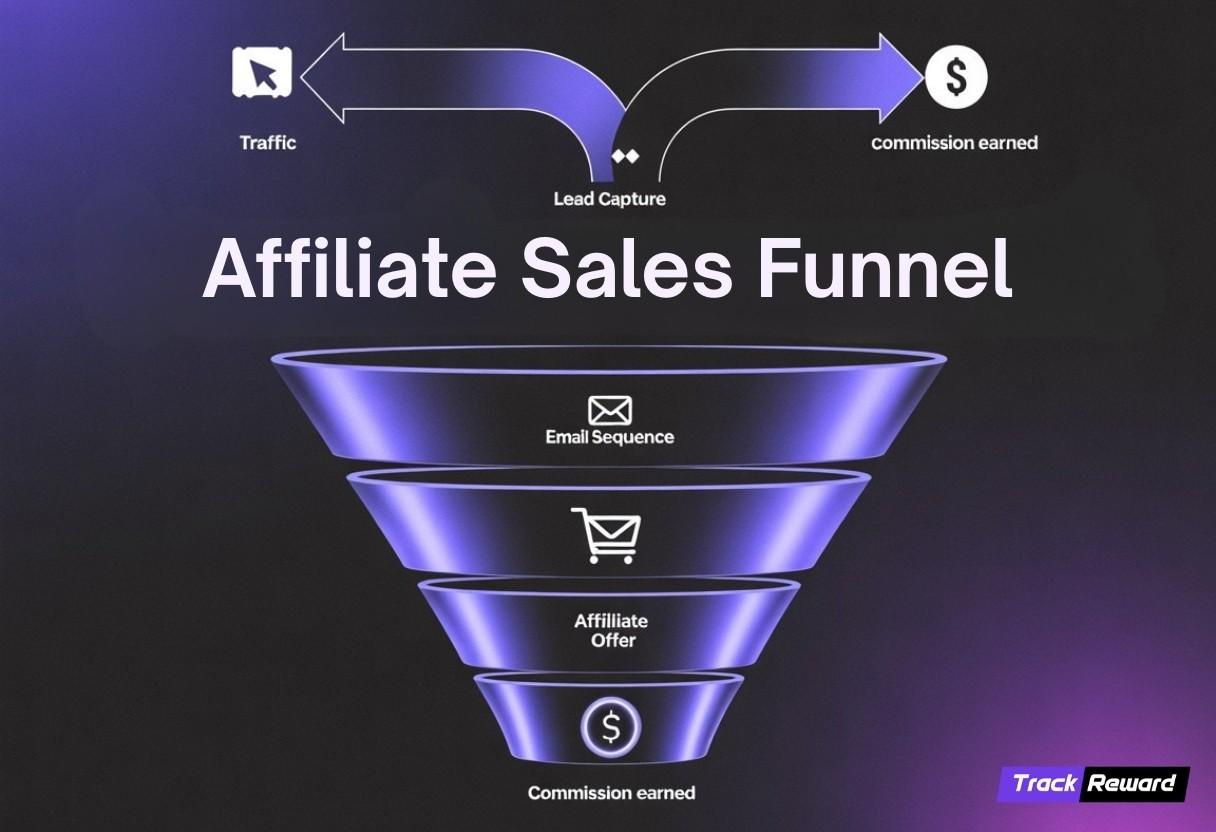
An affiliate sale without a funnel is like giving someone a map with no destination. Confusing and slightly rude.
Building an affiliate sales funnel isn’t just about dropping links and hoping the internet gods smile upon you. It’s about creating a smooth, irresistible journey that takes a curious clicker and turns them into a loyal, repeat customer who practically champions your brand for you.
Think of it as setting up a digital conveyor belt. One that doesn’t squeak, jam, or scare people away. But instead guides them step-by-step from “hmm, interesting” to “Okay fine, take my money.”
Let’s explore how to build an affiliate sales funnel that not only captures referrals but converts them into raving fans.
What Is an Affiliate Sales Funnel?
An affiliate sales funnel is a multi-phase, systematic procedure that directs prospective buyers to use an affiliate's special link to complete a purchase.
This funnel serves as a road map for the customer experience from the initial interaction with a product to the ultimate conversion.
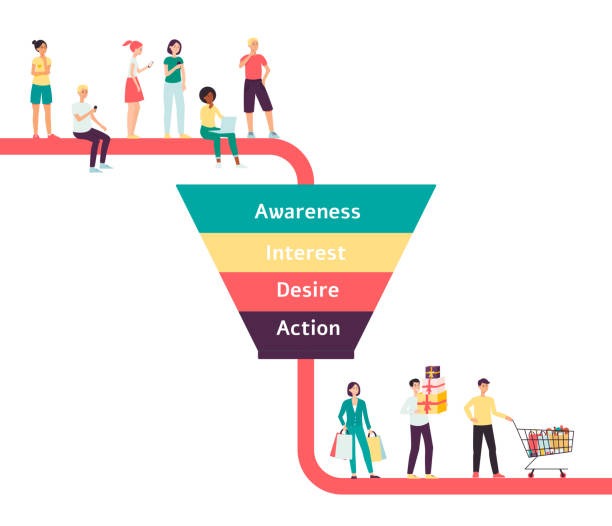
The basis for the affiliate sales funnel is the AIDA model - Awareness, Interest, Decision, and Action. It is customized for the affiliate marketing environment. In order to nurture leads and get them closer to making a purchase, each step is essential. Successful affiliate campaigns depend on comprehending and maximizing these phases.
- Awareness: People find your content through social media, YouTube, Pinterest, or Google.
- Interest: They choose to sign up for your free lead magnet (eBook, video training, checklist).
- Decision: They trust you after reading your nurturing content (emails, reviews, bonuses).
- Action: They click your affiliate link and make a purchase, frequently more than once.
- In contrast to conventional funnels, you control the connection rather than the checkout.
Why Are Affiliate Sales Funnels Crucial for Converting Referrals into Loyal Customers?
By carefully directing new referrals through various phases of engagement and conversion, affiliate sales funnels are crucial for converting them into loyal clients. These funnels employ targeted strategies and incentives to foster lasting client relationships that extend beyond one-time purchases.
The Role of the Funnel in Building Loyalty
Awareness & Interest (Top of Funnel): The funnel begins by providing helpful, problem-solving information (such as e-books, manuals, and in-depth reviews) rather than making a pitch right away. It helps to draw in appropriate visitors and establish initial credibility.
As a result, the affiliate is positioned as a reliable advisor rather than merely a salesperson.
Decision & Action (Middle/Bottom of Funnel): To gather visitor data for future interaction, the funnel employs lead magnets, such as free courses or checklists.
The audience is more open to the final affiliate offer when follow-up correspondence, frequently via automated email sequences, responds to concerns, offers social evidence (testimonials, case studies), and reaffirms the product's worth.
Loyalty & Advocacy (Post-Purchase): A sale is not the end of the process. Post-purchase interaction, such as thank-you emails, follow-up articles, and special offers on related products, is all part of a well-designed funnel.
In addition to increasing client lifetime value, this ongoing value delivery transforms happy consumers into brand evangelists who naturally refer others.
A study says, “a referred customer has a 37% greater retention rate and is 18% more devoted.”
Key Elements of an Effective Affiliate Sales Funnel
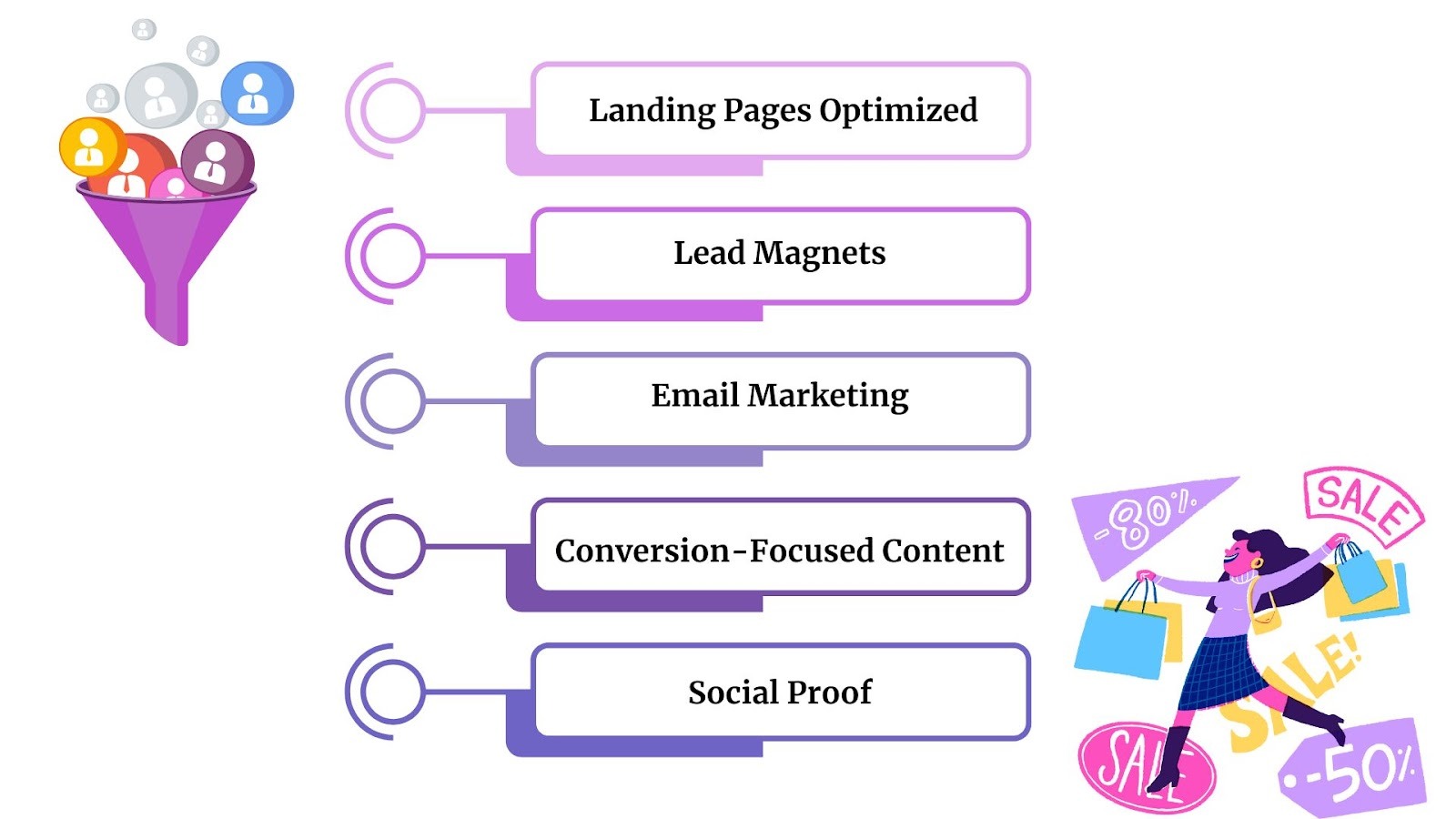
Landing Pages Optimized for Affiliate Products
These are specialized websites created to either route visitors to an affiliate offer or collect visitor data. To increase visitor engagement and lower bounce rates, they should
- Be aesthetically pleasing
- Have obvious calls to action
- Be extremely pertinent to the affiliate product being advertised
Lead Magnets
Lead magnets are useful resources that are provided at no cost in return for contact details, usually an email address. Examples include educational eBooks, useful checklists, special templates, or free webinars. They address a particular need or issue and offer instant value to draw in and qualify leads.
Email Marketing for Nurturing Leads
Email marketing for lead nurturing is sending subscribers who have opted in via a lead magnet a series of automated or manual emails. Through a series of interesting and educational messages, the goal is to
- Build relationships
- Offer more value
- Tell them about the affiliate product
- Gradually steer them toward a purchase
Conversion-Focused Content
By emphasizing the characteristics and advantages of the affiliate product, this kind of content seeks to educate and convince potential customers. Prospects are more likely to convert when they understand how the product solves their problems and why it's the best option.
Thanks to thorough product reviews, step-by-step instructions, comparison guides, and hands-on demonstrations.
Social Proof
Social proof is presenting positive experiences and outcomes from current users or clients to establish credibility and trust. Some examples are: testimonials, star ratings, case studies, success stories, and endorsements. They all show the product's efficacy and dependability, easing potential buyers' concerns and promoting sales.
How to Build an Affiliate Sales Funnel Step-by-Step?
The strategic process of creating a successful affiliate sales funnel entails a number of crucial processes. All of which are intended to lead prospective clients from initial awareness to a purchase.
You build a solid foundation for the success of your funnel by carefully choosing your affiliate program and producing engaging content. This rigorous strategy guarantees that all the components work together to increase conversions.
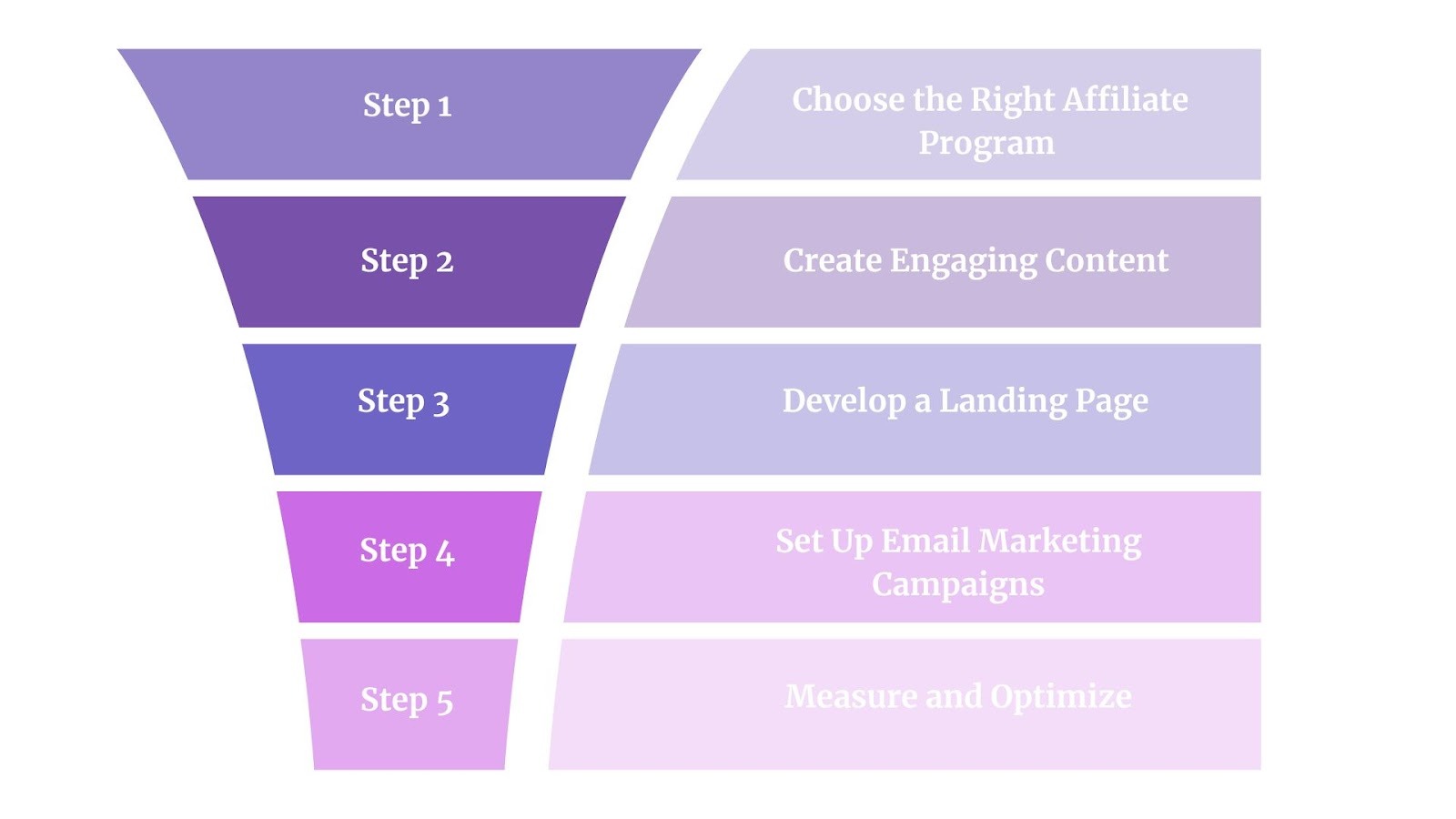
Step 1: Choose the Right Affiliate Program
Niche Relevance: Choose shows that actually fit the theme of your material and the interests of your audience. This guarantees that your suggestions feel worthwhile and organic rather than coerced.
Commission Structures: Select programs that offer lucrative commissions for your work by being aware of the payout mechanism (such as %, fixed fee, or recurring). Increased commission rates might have a big effect on your total income.
Step 2: Create Engaging Content
Blog Posts: Create educational articles, reviews, or guides that organically incorporate your affiliate products as fixes for typical issues or requirements.
Videos: To visually highlight the advantages of the affiliate product, create interesting video material, such as product demonstrations, unboxings, or comparative evaluations.
Social Media Posts: Make use of sites like Facebook, Instagram, and Pinterest to share eye-catching images and succinct descriptions. They help to spark curiosity and drive visitors to your content or landing page.
Step 3: Develop a Landing Page
Optimize for Conversions: Design a clear, concise landing page with a strong call to action. It highlights the key benefits of the affiliate product. Minimize distractions to keep visitors focused on the next step.
Include Affiliate Links: Strategically place your affiliate links within the landing page content. As a result, this makes it easy for visitors to find and click when they are ready to learn more or make a purchase.
Step 4: Set Up Email Marketing Campaigns
Lead nurturing: Produce a sequence of automated emails that offer extra benefits, foster trust, and gradually direct subscribers to the affiliate product. Some examples are case studies, endorsements, and sophisticated advice.
Follow-ups: Plan follow-up emails to address frequent concerns, remind prospective buyers of the advantages of the product, or provide time-limited incentives to entice a purchase.
Step 5: Measure and Optimize
Track Conversions: Keep an eye on how many visitors are passing through your funnel and becoming customers by using analytics tools. This information is essential for locating bottlenecks.
A/B testing: To determine which variations work best, try out various headlines, calls to action, content formats, or email subject lines. The secret to optimizing the effectiveness of your funnel is ongoing testing.
Optimizing Your Affiliate Funnel for Maximum Conversions
For your marketing efforts to be effective and to maximize conversions, you must optimize your affiliate funnel.
Enhancing your website or landing pages to raise the proportion of visitors who finish a desired action, like completing a form or making a purchase, is known as conversion rate optimization, or CRO.
CRO concentrates on improving results from current traffic by identifying friction points and improving the user experience, as opposed to boosting ad expenditure.
Use Analytics Tools
Google Analytics: Google Analytics 4 (GA4) is a great tool for identifying user pathways within your application, tracking marketing activities, and evaluating conversions. It offers a comprehensive manual for utilizing funnels.

[Source: TrackReward]
Affiliate Tracking Software: TrackReward is the modern, all-in-one affiliate tracking software. It is built by actual affiliate managers who’ve scaled multi-million-dollar programs.
With pixel-perfect tracking, real-time analytics, recurring & multi-tier commissions, fraud protection, and a beautiful branded affiliate dashboard, TrackReward makes it effortless to launch, manage, and scale profitable affiliate campaigns. Whether you run e-commerce, SaaS, or digital products.
Start your 14-day free trial today - no credit card required.
Refine Content for Better Engagment
Better Headlines: As headlines have a big impact on user engagement and conversion, they are among the most important components to evaluate. Try varying the headline's length, emotional appeals, and feelings (positive versus negative).
Additionally, you can experiment with putting testimonials directly in your headlines, asking questions instead of making statements, and using facts.
Subheadings enable unique titles while maintaining clarity by supporting the primary headline and elucidating the offer.
Call-to-Action (CTA) Buttons: A weak or generic call to action (CTA) can discourage users from taking action. Use action-driven language that conveys value in place of generic phrases like "Submit," like "Start My Free Trial" or "Download My Free Guide".
Contrasting colors should make CTAs stand out, and they should be placed above the fold so that consumers can see them right away.
Study shows that customized CTAs convert 202% more than generic ones.
Common Mistakes to Avoid When Building an Affiliate Sales Funnel
When developing affiliate sales funnels, a number of crucial errors can result in less-than-ideal performance. The success of an affiliate marketer can be greatly increased by comprehending and resolving these problems.
So, some common mistakes are:
- Not targeting the right audience
- Overlooking mobile optimization
- Poor email segmentation
- Not tracking affiliate performance
Wrap Up!
The harsh reality is that sending raw clicks directly to an offer is like bringing a plastic spoon to a duel. You will never create an empire, but you might be fortunate once or twice.
In 2025, the affiliates who silently make money do the same thing: they control the relationship, the list, and the funnel. Additionally, they now have the world's most accurate and hassle-free tracking. Thanks to TrackReward, so every click, conversion, and recurring commission ends up safely in their pocket (no disagreements, no "lost" transactions, no panic attacks at two in the morning).
So, Grab Your TrackReward Free Trial Now & Start Building Funneling Like a Pro!
Frequently Asked Questions (FAQs)
How long does it take to convert referrals into loyal customers?
Converting referrals into devoted clients doesn't have a deadline; instead, it depends on continuously providing value and developing a solid rapport over time. In addition to the original referral, loyal consumers are developed over months through a great experience, trust, and making them feel appreciated.
How do I track the performance of my affiliate sales funnel?
You must set up appropriate tracking methods, keep an eye on important data at every level, and utilize the appropriate analytics tools to pinpoint drop-off spots and refine your approach if you want to track the success of your affiliate sales funnel.
Can I use social media to promote my affiliate sales funnel?
Social media can and should be used to advertise your affiliate sales funnel. Social media platforms are effective tools for increasing traffic, fostering audience trust, and assisting prospective clients as they move through the awareness, consideration, decision, and loyalty phases of an affiliate sales funnel.