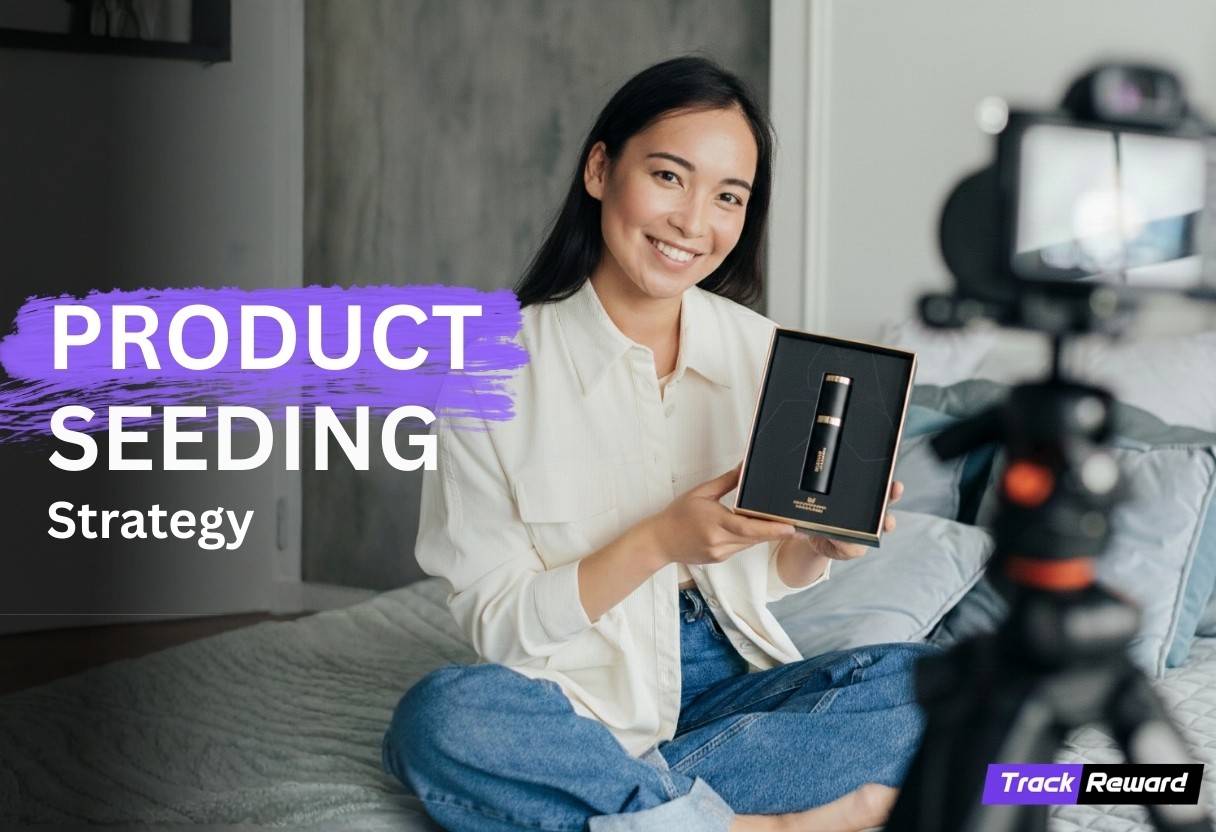
If you’ve ever wondered how brands “accidentally” go viral, spoiler: product seeding is usually the mastermind behind the scenes.
A product seeding strategy is more than just sending out free samples. It’s a calculated move that places your brand directly into the hands of the voices your audience already trusts.
By partnering with influencers, you are not only building authentic visibility but also opening the door to powerful affiliate growth. When creators genuinely experience and showcase your product, their recommendations carry weight. As a result, it drives higher engagement, stronger conversions, and long-term brand loyalty.
So, in this age of influencers, a well-timed product seeding strategy isn’t just an option. It’s a scalable pathway to turning organic buzz into measurable revenue.
What is Product Seeding?
Product seeding is a strong marketing tactic in which brands give their products away for free to influencers, content producers, or other relevant people. This strategy is unique in that the influencer is not required to pay anything up front. As a result, it promotes a more natural and genuine relationship with the product. It’s a critical approach in establishing true brand advocacy and reaching new audiences through trusted speakers.
The main goals of product seeding are:
-
Increasing brand recognition
-
Improving product exposure
-
Building natural advocacy
It often leads to real endorsements and user-generated content by allowing users to experience the product personally. The content ultimately resonates more deeply with potential customers than traditional advising. This strategy uses influencers’ credibility to spread the word organically.
Where Does Product Seeding Fit in Marketing?
Product seeding efficiently integrates into numerous marketing frameworks, like:
Influencer Marketing: It is a vital component that enables influencers to showcase products they actually use and love.
Affiliate Programs: Seeding can occasionally lead influencers to join affiliate programs and earn income from sales generated by their advocacy.
User-Generated Content (UGC): An abundance of genuine UGC, which acts as potent social proof for the business, is a direct result of product seeding.
A report says,
With an engagement rating of 2.19% as opposed to 1.94%, gifted collaborations generate 12.9% greater engagement than paid partnerships.
Why Does Product Seeding Work So Well?
Authentic product experiences result in genuine, trustworthy testimonials. Plus, it's a cost-effective alternative to paid campaigns. Brands only incur shipping and product costs initially, with potential returns considerably exceeding the investment.
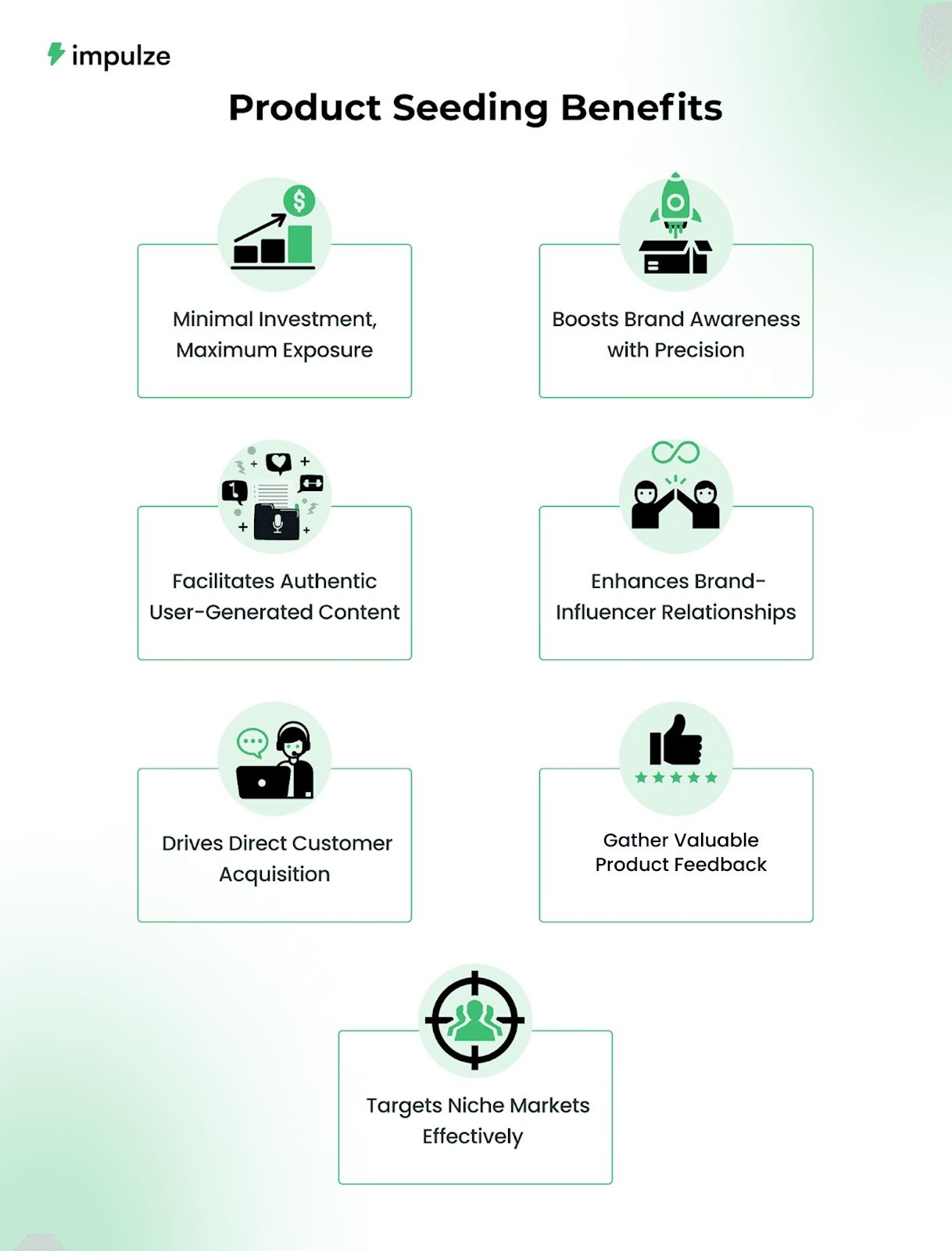
Approximately 49% of customers are more inclined to purchase a product after seeing it advocated by an influencer, showing the considerable impact influencers have on consumer behavior. Product seeding can lead to a significant increase in brand awareness and reach, as influencers often have large, engaged followings that help spread brand messages quickly.
Why Product Seeding Works for Affiliate Growth
Product seeding isn’t simply another influencer approach. It’s one of the highest-ROI levers you can pull when your main aim is expanding an affiliate network. Here’s exactly why it surpasses typical paid influencer campaigns and even most sponsored advertisements when it comes to driving sustained affiliate revenue.
-
Trust & Credibility = Higher Conversion Rates
Customers still trust the people they follow, but they are numb to slick advertisements. When an influencer receives an item for free, tries it without pressure, and then willingly posts about it, their recommendation feels 100% legitimate.
That credibility directly translates into increased click-through and conversion rates on affiliate links.
-
Extreme Scalability
You're not making upfront payments or negotiating contracts. You may seed 50, 100, or even 500+ artists per month without going over budget once your outreach method and fulfillment procedure are perfected.
-
Truly Performance-Based & Cost-Effective
This is the golden grail for affiliate marketers: you essentially pay $0 in influencer fees unless a transaction happens.
A report says,
With a compound annual growth rate (CAGR) of 8.00% between 2024 and 2031, the global affiliate marketing market is expected to reach $31 billion by 2031.
-
Evergreen Content Machine
One seeded product can yield many long-tail assets:
-
A YouTube review that has ranked for years
-
A seasonally reshared TikTok
-
An Instagram carousel saved to highlight loops
-
A blog post including affiliate links in the content and sidebar
These assets maintain driving affiliate sales months (or years) past the very first planting – something you rarely achieve with a one-off paid post.
-
Precision Audience Targeting
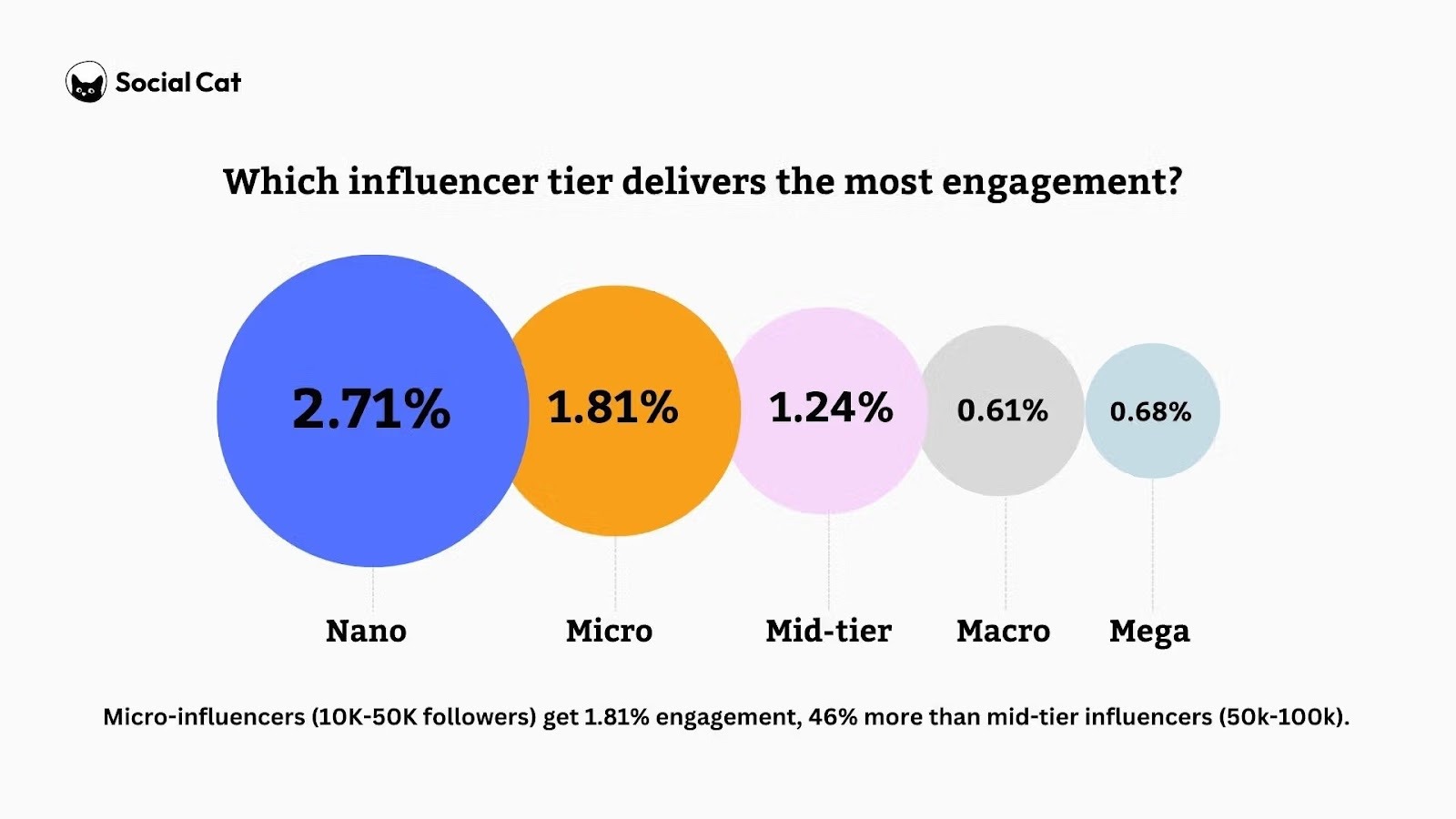
Macro-influencers are poorly targeted, although they have a large audience. Your specific specialty is home to micro and nano-influencers. A macro-influencer with 300k mixed followers will nearly always perform worse than a fitness supplement business planting a nano-influencer with 8k extremely engaged powerlifting fans.
-
Powerful SEO Side Effect
Every piece of influencer material usually includes at least one backlink (YouTube description, blog show notes, Linktree, LTK page, etc.).
Seed 100 authors → obtain 50–80 dofollow or contextual backlinks from relevant, high-trust domains. Most link-building companies would charge thousands for that SEO increase, but you receive it as a bonus.
So, the bottom line is -
-
Product seeding is a unique marketing strategy that
-
Generates high-converting traffic for your affiliate network
-
Builds trust
-
Scales simply
-
Costs virtually nothing up front
-
Produces evergreen assets
-
Helps SEO
It’s one of the most profitable growth channels accessible today when done with clever selection and follow-up.
How a Product Seeding Strategy Works
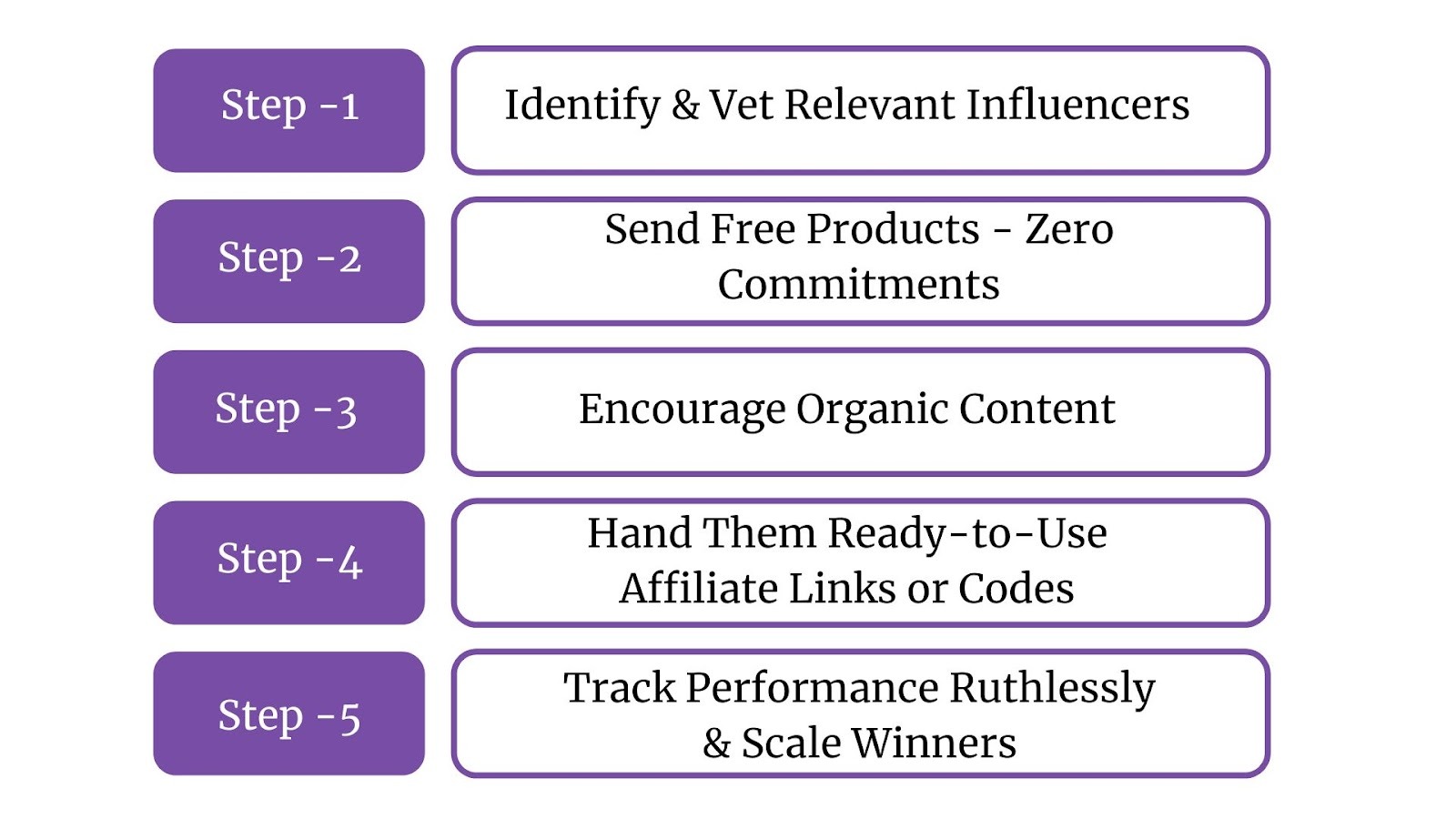
Step 1: Identify & Vet Relevant Influencers (The Foundation)
Do this wrong and everything else collapses.
-
Focus mostly on nano-influencers (1k–10k) and micro-influencers (10k–100k). They post more regularly and convert better when seeded.
Make use of these filters:
-
Engagement rate > 3–5% (likes + comments ÷ followers)
-
They already post about your competitors or related brands, naturally
-
Audience demographics match your ideal consumer (examine their comments, not simply follower count)
-
No history of posting 10 gifted things every week (red flag for low genuineness)
Step 2: Send Free Products - Zero Commitments
Here, psychology plays a crucial role: people post more when they are under less pressure.
-
Always lead with “no obligation to post.” Ironically, it results in a 20–40% boost in posting rates.
-
After they agree, ship within 5-7 days. Excitement is killed by slow satisfaction.
-
Make use of packaging that is Instagram-worthy and branded. The unboxing itself becomes content.
Step 3: Encourage (But Never Require) Organic Content
Subtle nudges work significantly better than demands.
-
Include a small handwritten thank-you note: “Excited for you to try this - share only if you genuinely love it! ”
-
Add a one-page “Ways to Share (If You Want)” insert with suggested hashtags, photo suggestions, and important product benefits.
-
Saying "please post by X date" will always result in #ad feelings.
Step 4: Hand Them Ready-to-Use Affiliate Links or Codes
Make monetization brain-dead easy or they won’t bother.
Best practice package inserts:
-
A special affiliate link (abbreviated Bitly or Pretty Links) OR a custom discount code (like "JESSICA15") that records sales automatically
-
A product sticker with a QR code that leads directly to the affiliate dashboard
-
If they are not currently enrolled in your program, they can sign up with just one click.
-
Explicit explanation of the commission: “You’ll earn 20% on every sale ($38 avg payout) - paid monthly.”
The easier you make it, the more links come up in bios, YouTube descriptions, and TikTok subtitles.
Step 5: Track Performance Ruthlessly & Scale Winners
The majority of companies fail at this point. They seed and ghost.
Establish tracking right away:
-
To determine precisely which influencer drove which sale, use UTM parameters or sub-IDs.
-
Best free affiliate tracking software that makes this painless: TrackReward, Tapfilate, ReferralCandy, and many more.
Important metrics to monitor:
-
Posting rate (percentage of content creators)
-
Link click-through rate
-
EPC (profits per click) and conversion rate
-
Content longevity (which posts keep earning 6+ months later)
Pros and Cons of Product Seeding
|
Aspect |
Pros |
Cons |
|
Financial Risk |
Low risk, high reward - Commissions are only paid when real sales take place. No huge upfront fees. |
Can still lose money on product cost + delivery if the influencer never posts or drives sales. |
|
Authenticity and Trust |
Highest authenticity - Influencers only share content when they truly enjoy it, which increases audience trust. |
No guaranteed content - Some influencers ghost you completely |
|
Content Quality |
Creates real, believable UGC that outperforms scripted ads. |
Quality Control Issues - Content tone, aesthetics, or messaging may not align with your brand. |
|
Speed and Reach |
Rapid brand awareness. |
Results are unpredictable. |
|
Overall ROI Potential |
One of the highest-ROI influencer tactics available today. |
Success depends on influencer selection and execution quality. |
How to Build an Effective Product Seeding Strategy
Follow this same 7-step approach, and you’ll turn random gifting into a predictable affiliate growth generator.
-
Define Your Goals: Decide your primary KPI before sending a single box.
-
Choose the Right Influencers: Focus 80%+ of budget on micro & nano creators.
-
Craft High-Converting Outreach Messages: Personalize + remove pressure = 40–65% acceptance rates.
-
Prepare Your Product Packages: Make the unboxing itself content.
-
Provide Affiliate Links or Discount Codes: Make earning money feel effortless.
-
Track Content & Sales Like a CFO: No tracking = throwing money away.
-
Scale What Works (This Is Where Million-Dollar Programs Are Built): Ruthlessly prune and double down.
Best Practices for Product Seeding in Affiliate Marketing
Let’s explore the best practices for product seeding in affiliate marketing:
Only Seed Creators Who Already Love Your Niche
Never risk on “maybe they’ll like it.” Look at their feed: if they’ve organically referenced a competitor, a similar product, or the problem you solve at least 3–5 times in the last 6 months, they’re a fit. These authors publish 4–6× more often, and their audience converts since the advice feels obvious and natural.
Always Send Your Highest-Quality or Best-Selling “Hero” Product
You should ship your flagship product, the one with the most 5-star reviews, and the one that people DM you about. Influencers can detect a dog product's scent from a great distance. Sending anything less than your utmost best is the fastest way to get ghosted.
Make Sharing Incredibly Easy With A Ready-Made Media Kit
Include everything in the package (digital link + physical USB if you want to go deluxe):
-
15+ high-res lifestyle and product-only images
-
7–10 vertical videos that have been edited and are prepared for posting
-
8 copy-paste captions (storytelling + hard-benefit versions)
-
Pre-loaded hashtags and your specific affiliate link/discount code
Offer Legitimately Strong Commission Rates Right Out Of The Gate
Stingy commissions = dead affiliate links. Current 2025 benchmarks for seeded creators:
-
Beauty, fashion, wellness: 25–40%
-
Tech & gadgets: 12–20% (more if recurrent)
-
Everything else: 18–30%
Start all of your top-tier seeded creators automatically. It costs you zero extra until they actually sell.
Engage With Their Content Like A Real Person
When they post, be the first to like, comment, save, and share from both the brand account and the founder’s personal account. Respond when they tag you in their stories. This one behavior transforms one-time seedings into long-term relationships and improves the likelihood that people will post about you.
Common Mistakes to Avoid
-
Sending things without screening creators.
-
Expecting assured material.
-
Not offering attractive affiliate commissions.
-
Neglecting relationship-building and follow-up.
-
Sending generic outreach messages.
Final Thoughts
In a digital world bursting with voices, your product only needs the right ones to echo it. And that’s where a smart product-selling strategy powered by influencers becomes a game-changer.
By pairing authentic influencer reach with a streamlined affiliate setup, you are not just boosting visibility. You are building a revenue engine that runs on trust, creativity, and audience loyalty.
And when it comes to smoothing out the behind-the-scenes chaos? TrackReward keeps every click, conversion, and commission perfectly aligned so you can scale without stress.
Ready to turn influencer buzz into real affiliate growth? Plug into TrackReward and watch your sales strategy level up!
Frequently Asked Questions (FAQs)
What is product seeding in influencer marketing?
Product seeding is an influencer marketing method where brands offer free products to influencers with the goal that they will organically share their experience with their audience.
Is product seeding free?
No, product seeding is not fully free; it entails the cost of the products themselves and delivery, yet it can be a cost-effective marketing tactic because there is no pay for the content creators to publish. While there are no "strings attached" like a guaranteed post, businesses do provide things to producers with the intention that they will be shared organically.
Do influencers have to post after receiving a seeded product?
No, influencers are not compelled to post after getting a seeded product because seeding is a low-pressure approach where marketers deliver things with no obligation to promote. Influencers have the option to opt out if they don't like the product or would rather not post about it, but the objective is to create real, organic coverage if they decide to share.
How does product seeding help affiliate sales?
Product seeding boosts affiliate sales by delivering free products to influencers and content creators, which motivates them to write honest content about the product, build trust with their audience, and eventually drive traffic and sales to the affiliate's link.